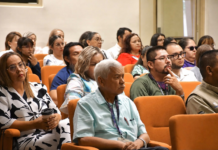
A delegation from Chihuahua, led by the State Government’s Secretariat of Rural Development and the Chihuahua Regional Livestock Union, participated in the binational Mexico-United States meeting on the Cattle Screwworm (CSW), held in Nashville, Tennessee, as part of the North American Cattlemen’s National Convention.
During the meeting, Mexican and American experts presented progress on actions implemented to address CSW, as well as other bovine diseases, and discussed the joint strategies and actions that are being coordinated between the two countries in the area of animal health.
The meeting was attended by authorities from the National Service for Agrifood Health, Safety and Quality (SENASICA) and APHIS, as well as representatives of livestock producers and animal health committees, who exchanged technical information on surveillance protocols, sanitary control, risk assessment, and binational cooperation mechanisms.
The head of the Secretariat of Rural Development, Mauro Parada Muñoz, reported that the sanitary measures being implemented in Chihuahua to prevent the entry of the Cattle Screwworm into the state were presented during the assembly, as well as the exchange of best practices with neighboring states in Mexico and the United States.

“Progress was reported on the actions being carried out to address GBG and other bovine diseases, as well as the joint actions we continue to promote between both countries,” he stated.
The official also reiterated the State Government’s position regarding the reopening of the U.S. market to Mexican live cattle.
“We continue to urge USDA-APHIS to consider the regionalization of the country and grant access through the quarantine stations in Sonora and Chihuahua for the export of live cattle as soon as possible,” he emphasized.
The Government of the State of Chihuahua reaffirms its commitment to maintain and strengthen the state’s health status, work in coordination with federal and international authorities, and support the livestock sector through responsible actions that protect animal health and advance the reopening of strategic markets.

Source: eldiariodechihuahua